BIS Certification Guide for Electric Coffee Mill with a Hopper Capacity Not Exceeding 500g
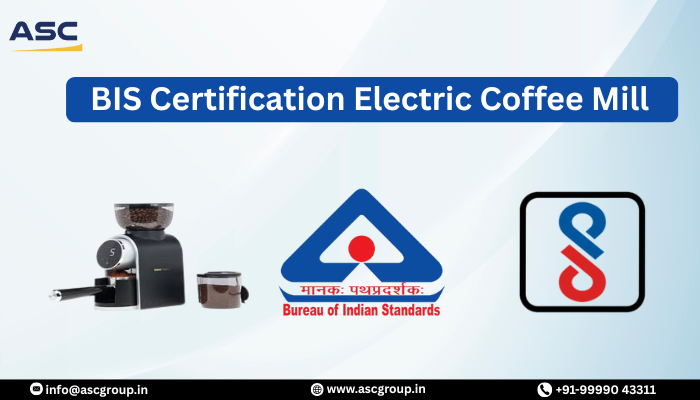
The use of electric coffee mills is now becoming essential for household use and for other commercial uses as well such as restaurants, cafes and hotels. The government authorities are more vigilant and working on regulations to maintain product quality for the use of consumers in the Indian market. They made it mandatory for manufacturers and importers selling an Electric Coffee Mill with a hopper capacity not exceeding 500g to follow the updated guidelines set by the government authorities under BIS certification.
This guide explains the compulsory standards, compliance process, and how ASC Group supports businesses in obtaining BIS approval smoothly.
Why BIS Certification Is Mandatory for Electric Coffee Mills
The Electric coffee mills are covered under the electrical kitchen machines for households. It is mandatory for the manufacturers and importers to ensure that the product is safe and durable for consumers' use.
This ensures:
- Electrical shock protection
- Safe mechanical and thermal operation
- Fire safety compliance
- Safety of food-contact materials
- Durability under frequent usage
These standards are updated in the year 2024 and 2025 that make it essential for the manufacturers and importers to align their product with the updated Indian standards.
Applicable Indian Standards (Updated for 2025)
1. IS 302 (Part 1): 2024
This IS is titled as Safety of Household and Similar Electrical Appliances – General Requirements, 2024. This Indian Standard is updated in recent year for electrical appliances for the Indian households, this standard ensures:
- Protection against electric shock
- Mechanical strength
- Temperature limits
- Internal wiring
- Moisture resistance
- Marking and labeling requirements
This is the primary mandatory standard for safety compliance.
2. IS 4250: 2025
This Indian standard is titled as the Electric Food Mixers, Grinders, and Similar Appliances – Specification, 2025. The government authority under BIS has published the revised documents.
It applies to:
- Electric grinders
- Coffee mills
- Compact food-processing appliances
It includes:
- Material safety
- Performance requirements
- Structural design
- Grinding and mixing efficiency parameters
3. IEC 60335-2-14: 2025
This IEC is titled as the Household and Similar Electrical Appliances – Safety – Part 2-14: Particular Requirements for Kitchen Machines, 2025.
The IEC standards are international and BIS standards harmonise with them. This ensures that products meet global safety expectations, making them suitable for export as well.
BIS Certification Process for Electric Coffee Mills
1. Determine Applicable Standards
IS 302 (Part 1): 2024 and IS 4250: 2025 must be followed.
2. Product Testing in a BIS-Approved Laboratory
Testing includes:
- Electrical safety
- Mechanical safety
- Thermal performance
- Endurance testing
- Food-contact safety
3. Factory Audit (for FMCS applicants)
Applicable for foreign manufacturers.
4. Application Submission
Submit documents including:
- Test reports
- Manufacturing layout
- Quality assurance plan
- Factory documents and authorizations
5. Review and Grant of BIS License
Upon successful evaluation, BIS issues:
- ISI Mark certification (for domestic manufacturers)
- FMCS license (for foreign manufacturers)
Why Compliance Is Crucial in 2025
The updated document about these standards is aimed to provide stricter safety rules for the manufacturers and importers. If organizations failed to fulfill the regulations then it can lead to:
- Product rejection at customs
- Market ban
- Penalties
- Loss of consumer trust
Complying with BIS ensures legal entry into the Indian market and enhances brand credibility.
How ASC Group Helps
ASC Group supports businesses with end-to-end BIS compliance for kitchen appliances, including electric coffee mills. Our services include:
- Identifying applicable standards
- Coordinating BIS-approved product testing
- Document preparation and application filing
- Liaising with BIS officials
- Ensuring smooth grant of ISI or FMCS certification
Manufacturers and importers rely on ASC Group to reduce compliance burden and speed up certification.
Conclusion
The BIS certification is an essential step for all the businesses including both manufacturers and importers to enter the Indian market. It is the responsibility of the Businesses to align their products quality with the Indian standards set by the government authorities in India. ASC Group BIS Registration Consultant has decades of experience in assisting businesses to attain the BIS certification with ease
Leave a Reply