Indian Market Entry Strategy Service for Germany
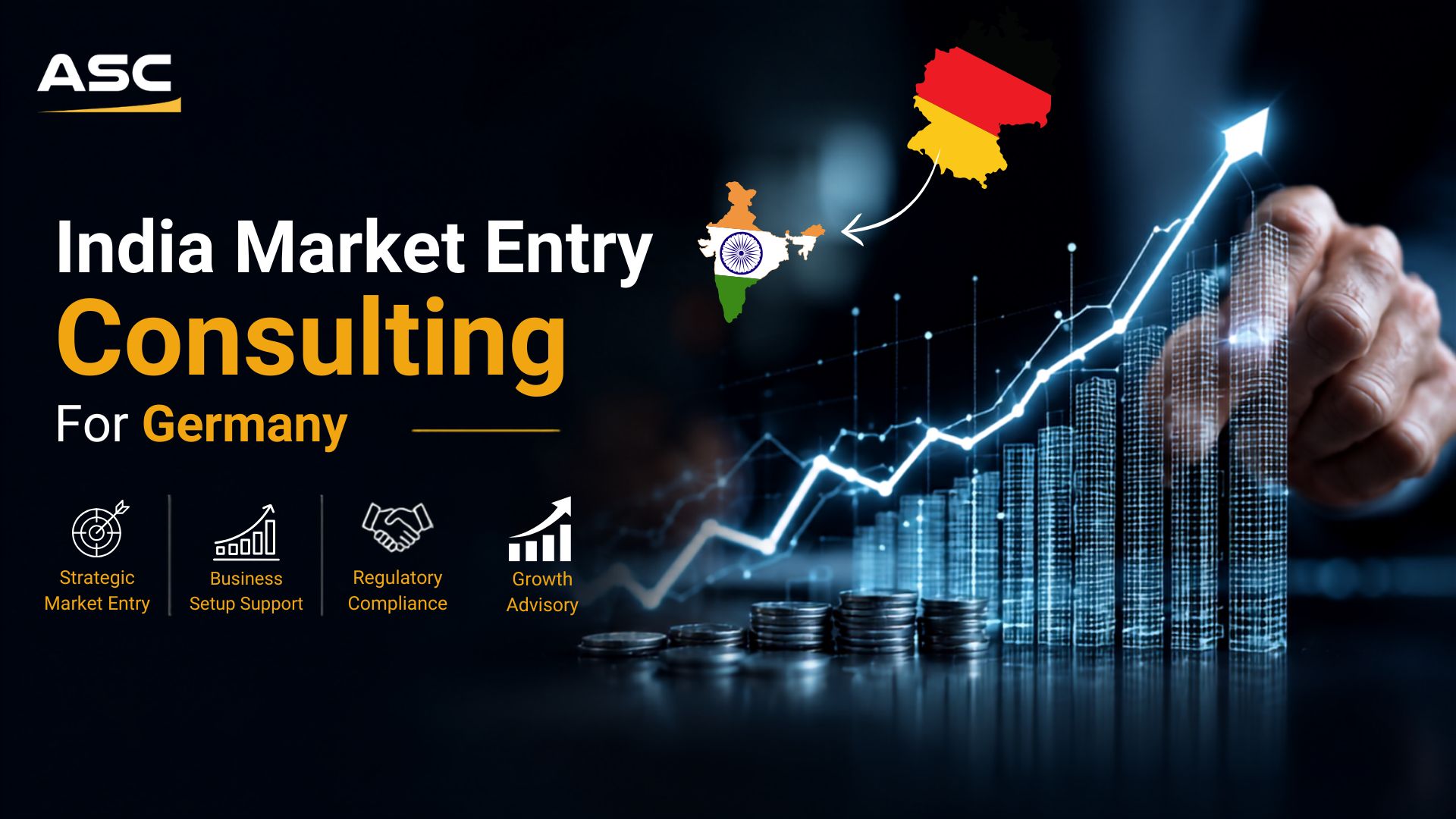
Why German Companies Are Expanding Into India Now
Germany's industrial base is under structural pressure — high domestic energy costs, an aging workforce, and slowing automotive demand at home are pushing the Mittelstand and large industrial groups alike to look outward. India offers what few markets can simultaneously: a manufacturing cost base competitive with Southeast Asia, an engineering talent pool trained in German-compatible technical standards, and a domestic demand story in automotive, renewable energy, and industrial equipment that is still in its early growth curve. For German Mittelstand firms specifically, India increasingly represents not just a market but a long-term manufacturing and engineering partner as China-dependency concerns reshape German industrial strategy.
The India-Germany Business Relationship
Germany is India's largest trading partner within the European Union, with bilateral trade exceeding €30 billion annually and over 1,800 German companies already operating in India. The two countries operate under a long-standing Strategic Partnership, reinforced by the India-Germany Inter-Governmental Consultations (IGC) mechanism — one of the few such mechanisms India holds with any country. The Indo-German Chamber of Commerce is one of the largest bilateral business chambers in India, actively supporting Mittelstand entry. While India and the EU are still negotiating a comprehensive Free Trade Agreement (expected to influence tariff treatment on industrial goods), Germany and India already cooperate closely through the Green and Sustainable Development Partnership and vocational-training collaborations that directly benefit German manufacturers needing skilled shop-floor talent in India. The India-Germany Skill Development partnership, modeled loosely on Germany's dual vocational training system, is particularly relevant for Mittelstand manufacturers who depend on precision-trained technical staff rather than generalist factory labor — a workforce gap Indian ITIs and German-supported training centers are actively closing in automotive and engineering hubs.
Why German Companies Choose India: Sector Drivers
-
Automotive & Auto Components: India's EV transition and domestic vehicle production scale (fourth-largest automobile market globally) make it a natural localization destination for German automotive suppliers.
-
Engineering & Industrial Machinery: India's infrastructure and capital goods buildout mirrors demand patterns German Mittelstand engineering firms already serve at home.
-
Chemicals: India's chemical manufacturing sector is expanding under PLI-linked specialty chemical incentives, attracting German chemical majors seeking capacity diversification.
-
Renewable Energy: India's renewable capacity targets create direct demand for German wind, solar component, and grid-technology expertise.
Who Actually Enters India From Germany
The dominant persona is the German Mittelstand company — typically family-owned, engineering-led, and revenue between €50M-€500M — entering India through a joint venture or wholly owned manufacturing subsidiary rather than a sales office alone. Alongside them are large-cap automotive suppliers establishing tier-1/tier-2 component plants near existing OEM clusters, and specialty chemical manufacturers building India capacity to serve both domestic demand and export markets. Unlike US SaaS entrants, German companies overwhelmingly enter India for manufacturing and engineering presence, not primarily for talent-cost arbitrage.
Strategic Benefits for German Companies Entering India
For German automotive component manufacturers specifically, India's expanding EV ecosystem combined with an established domestic vehicle manufacturing network creates long-term localization opportunities that reduce exposure to European demand cycles. For German engineering firms, India's PLI scheme for capital goods and the National Manufacturing Mission provide direct cost offsets for setting up production. For chemical manufacturers, India's lower feedstock and labor costs, combined with proximity to both domestic and Middle East/African export markets, materially improve landed-cost economics versus continued German-based production for these markets.
Industry-Specific Opportunities
Beyond automotive and engineering, German Mittelstand firms are finding traction in precision tooling and machine components (serving India's growing capital goods sector), industrial automation and robotics (aligned with India's manufacturing modernization push), and green hydrogen technology, where German expertise directly complements India's National Green Hydrogen Mission. Rail and infrastructure engineering is a further growth area, with German signaling, rolling-stock, and construction-technology firms increasingly bidding into India's rail modernization and metro expansion programs. Each of these carries distinct import-duty and technology-transfer licensing considerations that a generic entry plan will miss, and several require prior sectoral approval rather than automatic-route clearance.
Country-Specific Challenges for German Companies
German companies most often struggle with three India-specific realities: compliance decentralization, since labor law, factory licensing, and land approvals vary meaningfully by state, unlike Germany's more centralized regulatory environment; slower contract enforcement timelines than German companies are accustomed to, which affects joint venture and supplier agreement drafting; and works-council-style expectations translating poorly, since India's labor relations framework operates on entirely different statutory footing than German co-determination (Mitbestimmung) norms. A fourth challenge is pricing discipline — German engineering firms accustomed to premium positioning at home often need a distinctly tiered India pricing strategy to compete against domestic and Southeast Asian manufacturers without diluting brand positioning built over decades in Europe.
The India Market Entry Roadmap for German Companies
-
Entity and JV strategy — Wholly owned subsidiary vs. joint venture, decided against sector FDI caps and the need for local manufacturing partnerships.
-
Regulatory and licensing mapping — Factory licensing, environmental clearances, and state-level industrial approvals.
-
Incorporation and land/facility setup — Company registration alongside site selection, often in Tamil Nadu, Gujarat, Maharashtra, or Karnataka industrial corridors.
-
Technology transfer and IP structuring — Protecting German engineering IP within licensing or JV agreements.
-
Workforce compliance — PF/ESI, factory-floor labor law, and technical training partnerships.
-
Ongoing compliance — GST, transfer pricing documentation for German parent transactions, and annual statutory filings.
How ASC Group Supports German Companies
We work alongside German Geschäftsführer and international expansion teams to translate German corporate governance and Mittelstand decision-making culture into India-compliant structures, managing state-level licensing variation and JV negotiation support so your leadership team retains full oversight without absorbing daily regulatory complexity. Because many Mittelstand entries involve family-office-style decision-making rather than large corporate M&A teams, we structure our advisory engagement to match — direct access to senior consultants rather than layered account teams, and documentation delivered in the German-compatible reporting formats your Geschäftsführung and Aufsichtsrat expect for capital deployment approval.
Real Business Scenario
A German automotive component manufacturer with an existing OEM relationship in Europe needed a Pune-area facility to supply a growing India-based automotive client within twelve months. We structured the entity, secured environmental and factory licensing in parallel rather than sequentially, and completed technology-transfer documentation to protect the parent company's IP — reducing what is typically an 18-month setup to under twelve.
Case Study Snapshot: Mittelstand Chemical Entry
Objective: A German specialty chemicals Mittelstand firm sought India capacity to serve both domestic and Gulf export demand. Challenge: Environmental clearance requirements differed significantly from EU REACH-based processes the company was used to. Strategy: We ran a parallel clearance and incorporation track and structured a phased capital infusion aligned to construction milestones. Outcome: Facility commissioning proceeded without the compliance delays common to first-time German chemical entrants.
German Companies Already Succeeding in India
Bosch operates one of its largest global manufacturing and R&D footprints in India across automotive and industrial technology. Siemens has a decades-long India manufacturing and infrastructure presence. BMW and Mercedes-Benz both run India assembly operations serving domestic premium demand. SAP operates major India-based product engineering centers. BASF has expanded India chemical manufacturing and R&D capacity. Each entered through a different model — wholly owned manufacturing, JV, or engineering-center-first — illustrating that entry structure should follow strategic intent, not a single template.
Frequently Asked Questions
Do German companies need a local JV partner to enter India?
Not in most manufacturing sectors under the automatic FDI route, though JVs remain common where local distribution networks or land access are strategically valuable.
How does India-Germany's Strategic Partnership affect market entry practically?
It doesn't reduce statutory compliance requirements, but it does mean established bilateral chambers, IGC-linked government contacts, and vocational training partnerships are available to ease workforce and stakeholder engagement.
What is the most common delay for German manufacturing entrants?
Sequential rather than parallel processing of factory licensing, environmental clearance, and incorporation — each can proceed simultaneously with correct planning.
Is India's EV transition relevant even for combustion-engine component makers?
Yes — most German auto component manufacturers are structuring India entry with dual-capability lines to serve both existing ICE demand and the growing EV supply chain simultaneously.