BIS for Stainless Steel Utensils in India: IS 14756 Guide
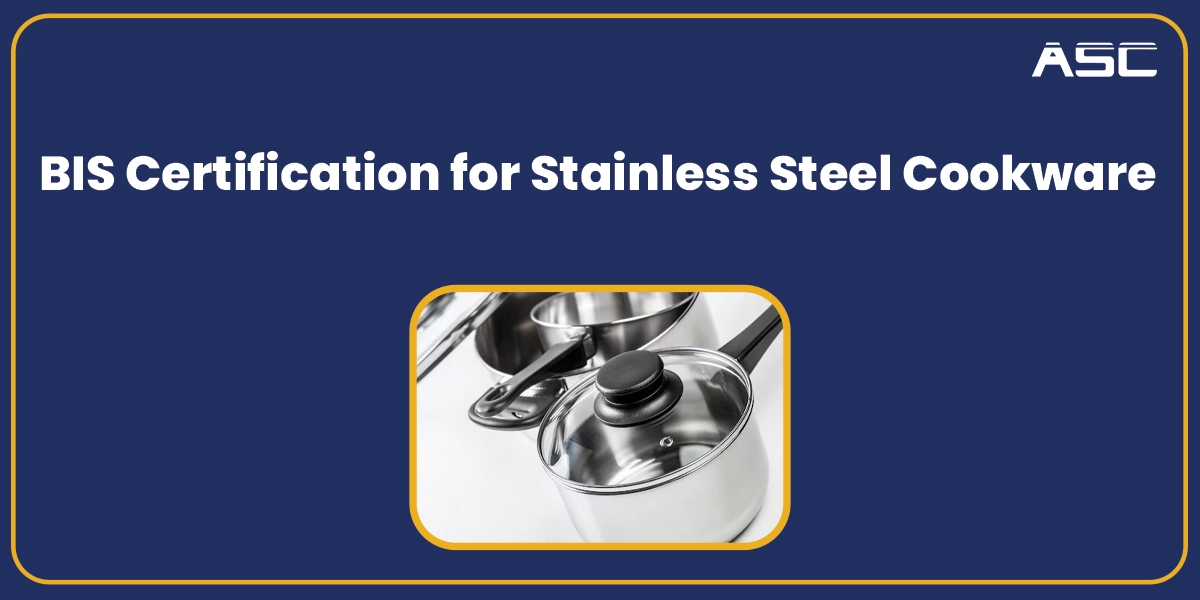
Stainless steel tiffins, pots, kadhais, and pressure cookers fill Indian kitchens, and the rules behind them have changed. Under the Cookware, Utensils and Cans for Foods and Beverages (Quality Control) Order, 2025, stainless steel utensils must conform to IS 14756:2024 and carry the BIS Standard Mark. The phased deadlines have already passed for all enterprise sizes. This guide explains the requirement, the history, and what manufacturers, importers, and sellers should check. For licensing support, see our BIS certification services in India.
Key takeaways
- The requirement comes from the Cookware, Utensils and Cans for Foods and Beverages (Quality Control) Order, 2025, notified on 21 August 2025.
- The applicable standard is IS 14756:2024 (Stainless Steel Utensils).
- Dates: 1 October 2025 (general), 1 January 2026 (small), 1 April 2026 (micro).
- Imports are covered, so foreign manufacturers need BIS certification as well.
- Certification follows the ISI Mark route with a factory inspection.
Contents
- How the rules developed
- What the standard covers
- Deadlines
- Who must comply
- How to get certified
- Common mistakes
- Consequences of non-compliance
- FAQs
1. How the rules developed
Cookware entered the quality control system in 2023 and was reissued in 2024 and again in 2025, each time with revised dates and updated standard references. The 2025 order fixed the current timeline and moved to the 2024 version of the standard. Because these orders have been replaced repeatedly, always check which version your supplier or auditor is quoting.
2. What the standard covers
IS 14756:2024 sets requirements for stainless steel utensils used for cooking, heating, and handling food and beverages. If your product is a stainless steel utensil or cookware item, check its scope in the standard rather than relying on product names. Aluminium utensils follow a different standard and order, covered in our guide on BIS for aluminium utensils.
3. Deadlines
| Enterprise type | Compliance date |
|---|---|
| General (other than micro and small) | 1 October 2025 |
| Small | 1 January 2026 |
| Micro | 1 April 2026 |
All three dates have passed, so unmarked covered utensils should no longer be made, imported, or sold, except where a specific exemption in the order applies.
4. Who must comply
- Manufacturers need a BIS licence for the utensils they produce.
- Importers must bring in only licensed, marked goods. Foreign factories can seek certification through the Foreign Manufacturers Certification Scheme. See our guide on BIS FMCS certification.
- Wholesalers, retailers, and online sellers should confirm that stock carries the mark and a licence number.
5. How to get certified
- Confirm scope against IS 14756:2024.
- Prepare factory documents and process details.
- Test samples at a BIS-recognised laboratory.
- Apply for the BIS licence and complete the factory inspection.
- Mark every product with the Standard Mark and licence number after approval.
6. Common mistakes
- Quoting the 2022 version of the standard instead of the 2024 version.
- Assuming small or micro status still gives extra time.
- Importing a consignment before the supplier’s licence is confirmed.
- Mixing up the stainless steel order with the aluminium utensils order.
- Selling old stock beyond the time-limited relief the order allowed.
7. Consequences of non-compliance
Making, importing, or selling covered utensils without the mark violates the BIS Act, 2016. Risks include penalties, customs holds on imports, and loss of buyers.
FAQs
Is BIS certification mandatory for stainless steel utensils in India?
Yes, under the Cookware, Utensils and Cans for Foods and Beverages (Quality Control) Order, 2025, they must conform to IS 14756:2024.
Which standard applies?
IS 14756:2024 (Stainless Steel Utensils).
What were the deadlines?
1 October 2025 for general enterprises, 1 January 2026 for small, and 1 April 2026 for micro enterprises.
Do imported utensils need BIS certification?
Yes. Imported covered utensils must meet the same standard and carry the mark.
Conclusion
Stainless steel utensils are fully inside the BIS system. If you make, import, or sell them, confirm your licence covers the exact standard version, and check supplier licences before placing orders. For support, see our BIS certification services in India.
Related guides: BIS for Aluminium Utensils | BIS for Aluminium Products | BIS for Wrenches and Spanners
Advantages of BIS Certification for Stainless Steel Cookware
- Improved Product Safety: Certification ensures that the cookware meets cookware safety standards, minimizing risks for consumers and making it a safer choice for households.
- Better Marketability: BIS-certified stainless steel cookware is more likely to be accepted by retailers and consumers, enhancing the market appeal of the products.
- Access to New Markets: Many distributors, retailers, and even export markets require products to meet recognized standards like BIS Certification before accepting them.
- Compliance with Regulatory Standards: By obtaining BIS Certification, manufacturers can confidently meet India’s regulatory standards, avoiding potential penalties or legal complications.
- Enhanced Brand Reputation: Products with the ISI mark for kitchenware represent quality, improving brand recognition and building trust among consumers.
- Increased Consumer Satisfaction: BIS Certification ensures that customers receive high-quality, durable products, leading to better user experiences and higher satisfaction rates.
How ASC Group Assists with BIS Certification
Obtaining BIS Certification can be a complex process, but ASC Group’s expert consulting services are designed to simplify and streamline this journey for manufacturers. Our services include:
- Application Preparation: Our team assists manufacturers in preparing a complete and accurate BIS application, reducing the likelihood of delays or rejections.
- Testing Facilitation: ASC Group coordinates testing at BIS-approved labs to ensure compliance with IS 14756:2022 standards.
- Regulatory Consultation: We provide guidance on all regulatory aspects, ensuring that the manufacturer’s processes align with BIS guidelines.
- Audit Handling: Our experts offer support during BIS inspections or audits to help meet all required standards without complications.
- End-to-End Support: ASC Group’s comprehensive approach covers every step of the process, giving manufacturers a hassle-free experience with certification.
FAQ Section
1. What is BIS Certification, and why is it necessary?
BIS Certification verifies that products comply with national standards for safety, quality, and performance, ensuring consumer safety and regulatory adherence.
2. What is IS 14756:2022, and how does it apply to stainless steel cookware?
IS 14756:2022 specifies standards for stainless steel cookware regarding safety, durability, and hygiene, mandating compliance for BIS Certification.
3. Who needs to obtain BIS Certification for stainless steel cookware?
All manufacturers producing stainless steel cookware for sale in India must obtain BIS Certification to legally distribute their products.
4. What documents are required for BIS Certification?
Typical documents include application forms, technical specifications, testing reports, manufacturing details, and other regulatory paperwork.
5. How long does the BIS certification process take?
The timeline can vary but generally ranges from several weeks to months, depending on the product complexity and compliance requirements.

Leave a Reply