Guide for BIS Certification for Electric Coffee Makers
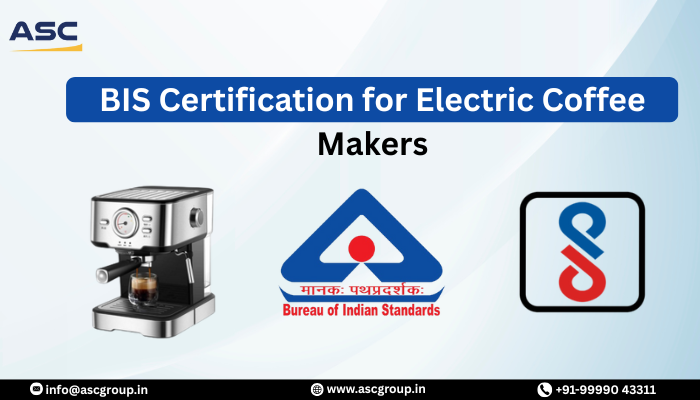
The demand for electric coffee makers is increasing day by day in the Indian market. In India there are many people who love to sip a cup of coffee while doing their daily work. Its demand is increasing in each household uses and for commercial uses such as restaurants, cafes, hotels and corporate offices. This demand also needs the quality check by the authorities before it is available in the market for the use of consumers.
It is important for manufacturers and importers to align their product as per the guidelines set by the government authorities such as:
- Indian Standard IS 302 (Part 2/Section 206): Particular Requirements for Electric Coffee Machines, along with
- IS 302 (Part 1): General Safety Requirements for Household and Similar Electrical Appliances.
This process is mandatory to maintain the record of the quality of the product and to test whether it is safe for the consumer's use or not.
Understanding the Applicable Indian Standard
The safety and performance of the product is tested under IS 302 (Part 2/Section 206). This standard is read with Part 1, it covers the essential technical requirements needed to prevent electrical hazards, overheating, leakage, and mechanical failure.
The standard addresses key safety elements such as:
- Protection against electric shock
- Thermal stability and overheating safeguards
- Durability of control mechanisms
- Safe water and steam handling
- Mechanical endurance of exterior housings and internal components
If your product is fulfilling the criteria set by the government authorities then it is considered as the authentic product in the Indian market and safe for the consumers use.
Core Safety and Performance Requirements
Electric coffee makers undergo rigorous evaluation under the Indian Standard. The important areas where your product will be tested:
- Electrical Insulation & Earthing
It is important for the product to have proper electrical insulation and clear all other necessary tests. Effective earthing is mandatory for metallic components.
- Overheating & Thermal Cut-Off
It is important for your product to include reliable temperature controls and thermal cut-outs that activate in abnormal conditions to prevent fires or burn hazards.
- Safety from water and steam problems
The use of coffee makers work with hot water and steam, it can cause some accidents. The design must prevent leakage, splashing, or pressure-related risks.
- Mechanical Strength
Switches, connectors, handles, and housing materials must withstand repeated use without compromising safety.
- Resistance to Moisture and Heat
The appliance must function safely even when exposed to steam, condensation, or spilled liquids.
Process of BIS Certification for Electric Coffee Makers
The manufacturers and importers need to follow this process to attain their certification:
1. Product Classification and Standard Evaluation
It is important to check the Indian standard aligning with your product's quality.
2. Technical Documentation Preparation
Manufacturers must compile a detailed technical file, including circuit diagrams, material specifications, and user instructions.
3. Sample Testing in BIS-Recognized Laboratories
Representative samples of the product undergo complete safety testing based on the clauses of IS 302.
4. Factory Assessment
The team of BIS officers will visit your manufacturing unit to check the ground reality and the raw material of the product. After factory assessment they will process your files to the next stage.
5. Certification Approval and ISI Marking
Once approved, the product receives a BIS license, allowing the manufacturer to apply the ISI mark. Continual compliance through surveillance testing is required.
Why BIS Certification Matters
For electric coffee makers, BIS certification:
- Ensures user safety
- Builds trust with consumers and retailers
- Helps avoid penalties or product seizures under Indian regulations
- Enhances brand reputation
- Supports seamless market entry and distribution
Conclusion
The certification process is the compulsory process for products like Electric coffee makers because it deals with electric and thermal materials. It is important for all manufacturers and importers to align their product with IS 302 (Part 2/Section 206) and other related standards to ensure that product is safe and durable for the use of consumers. Expert consultants of the ASC Group BIS Registration Consultant can provide better guidance to attain BIS certification for your product.
Leave a Reply