Guide from ASC Group for BIS Certification for Electric Churner
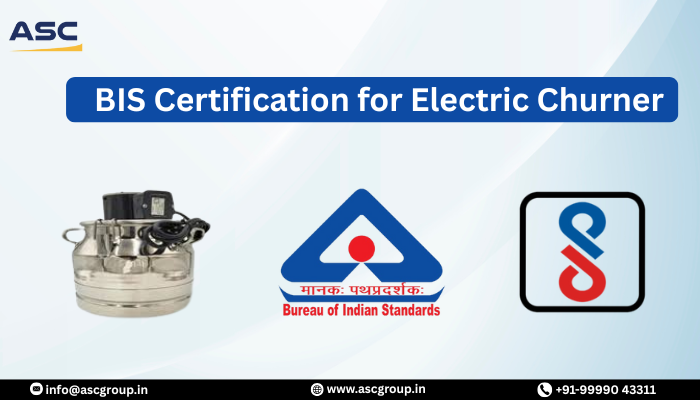
The use of electric churners in the Indian kitchens are continuously increasing day by day. The use of it in making butter, lassi and other Indian cuisines are rapidly growing. These products depend on the use of motors, electric components and rotating blades that make it important for the manufacturers to go through the essential security check process set by the government authorities. This is where BIS standards play a vital role. Manufacturers and importers dealing in electric churners must comply with the relevant Indian Standard and associated testing requirements before selling these appliances in India.
Understanding the Applicable Indian Standard
In India, electric churners fall under the broader category of motor-operated kitchen appliances. BIS regulates such appliances through:
H3: IS 4250:2021 (Specification for Electric Food Mixers, Liquidizers and Similar Appliances)
This Indian Standard covers general safety, performance, material quality, insulation requirements, power input, durability checks, and mechanical safety for household kitchen appliances. Since an electric churner functions similarly to mixers and motor-based food processors, it is assessed under the scope of IS 4250.
The standard ensures that:
- Electrical safety precautions are maintained
- Motor operations are stable and protected from overload
- Material used in jars, blades, and body is food-safe
- Product construction protects users from hazards
- Long-term heating risks and insulation issues are minimized
Relevant IEC Standard
Electric churners are also associated with an international benchmark:
H3: IEC 60335-2-14:2020
Safety of Household and Similar Electrical Machines for kitchen use
This global standard applies to mixers, grinders, blenders, and electric churners since they fall under “kitchen machines.” BIS aligns IS 4250 closely with the IEC 60335 framework to maintain international safety consistency.
Why Electric Churners Require BIS Compliance
Appliances that involve rotation, high-speed motors, or heating effects need strict safety evaluation. BIS certification helps ensure:
- Mechanical parts do not cause accidental injury
- Safe insulation of electrical products for long time
- Product has the components to resist heat and moisture
- Food-contact materials meet hygiene and quality benchmarks
- Motors are protected from overload or short circuits
This process is mandatory for manufacturers and importers to have BIS certification to get legal entry to the Indian market and this certificate will help in ensuring product safety and building trust among the consumers.
BIS Certification Process for Electric Churners
To certify an electric churner under BIS, manufacturers must follow these stages:
- Checking for the Indian standard aligning with your product, in this case, IS 4250 aligned partly with IEC 60335-2-14.
- Preparing the essential documents such as product drawings, details of material and safety instructions etc.
- Send product samples for testing at a BIS-recognized laboratory.
- Complete the factory inspection (for Indian manufacturers).
- Submit certification application to BIS along with test reports.
- Obtain the BIS license and apply the Standard Mark on the product.
How ASC Group Supports Manufacturers and Importers
ASC Group provides comprehensive compliance support for manufacturers and importers seeking BIS certification for electric churners. Their assistance includes:
- Standard identification and compliance mapping
- Technical documentation preparation
- Guidance in product testing and lab coordination
- Application filing and complete end-to-end certification support
- Managing the compliance requirements for the importers.
Our consultants at ASC Group BIS Registration Consultant have years of experience for helping our clients and provide them confidence by making this process of attaining BIS certification easy.
Leave a Reply