Electric Can Opener: BIS Standards, Certification Needs and Market Compliance in India
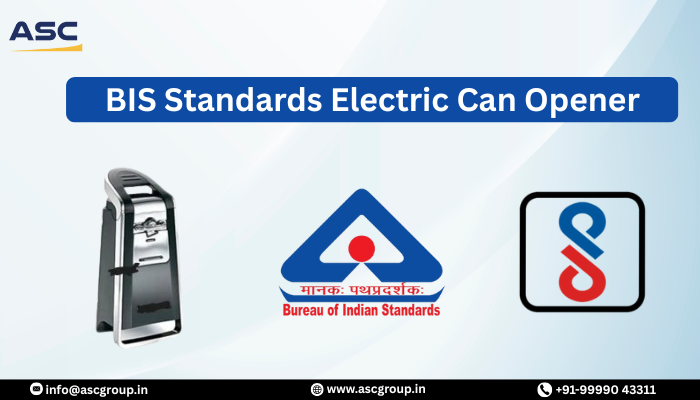
The use of electric can openers is rapidly increasing in the Indian market for both household and commercial purposes. These appliances use electric motors and moving blades that's why they fall under stringent safety requirements in India. The Bureau of Indian Standards commonly known as BIS is a regulatory body of the government of India to ensure the product is safe for the consumers use. For any manufacturer, importer or private label brand, meeting these standards is essential before placing electric can openers in the Indian market.
Applicable Standards for Electric Can Openers
Electric can openers are classified alongside domestic kitchen machines and small household electrical appliances. The following standards are relevant to their safety and performance:
- IS 302 (Part 1): 2024: India’s updated general safety standard for household and similar electrical appliances. This edition includes revised electrical and mechanical safety parameters.
- IS 302 (Part 2) / Section 14: 2009: This part outlines specific safety requirements for electric kitchen machines, products that include can openers, mixers, food processors and similar appliances.
- IEC 60335-2-14: 2025: The international standard that defines safety and operational guidelines for kitchen machines. It includes the international standards of consumer safety.
If a product is having this certification that indicates that the product is following all the guidelines mentioned in the above standards collectively and it is safe for the use of consumers.
BIS Certification Requirement for Electric Can Openers
With India placing a higher focus on consumer protection through updated Quality Control Orders, electric kitchen appliances must now undergo mandatory BIS certification. Electric can openers that operate within standard household voltage limits must comply with:
- IS 302 (Part 1): 2024
- IS 302 (Part 2) / Section 14: 2009
- IEC 60335-2-14: 2025 (to fulfill the international safety standards)
The updated guidelines of this rule indicate, it is essential for the manufacturers and importers to have this certification to sell their product in the Indian market. Many categories of electrical appliances will fall under mandatory certification from March 2026, with relief periods for smaller enterprises.
Compliance involves verifying safety in several areas, such as:
- Strength and durability of electrical components
- Protection against electric shock
- Stable performance under normal and abnormal usage
- Mechanical safety related to sharp edges, rotating parts and housing design
- Overload protection and temperature stability
- Proper warning labels, user instructions and identification markings
Products that meet these standards are authorized to bear the BIS Standard Mark, assuring consumers of verified safety.
Steps for Businesses to Achieve Compliance
For companies planning to enter the Indian market with electric can openers, a structured compliance approach is essential:
- Design Assessment
Verify that the product’s electrical design, blade enclosure, housing strength, insulation and wiring follow the requirements of the applicable Indian Standards. - Safety Testing
Submit product samples to a BIS-recognized laboratory for mechanical, electrical, thermal and functional safety evaluation. - Documentation for Certification
Prepare detailed specifications, test reports, product drawings and safety declarations as required by BIS. - Application for License
Apply under the appropriate BIS certification scheme and respond to any technical queries raised during evaluation. - Standard Mark Usage
After approval, the product must display the ISI Mark along with the relevant standard numbers and license details. - Ongoing Market Compliance
Certified products must continue to meet safety requirements, as BIS may conduct periodic market checks or sampling.
Why BIS Compliance Matters
A product that has a BIS-certified electric can opener means that product is safe for consumers use and it reduces risk of electrical accidents, safe handling near food products and dependable performance. This certification process is mandatory for businesses to enter the Indian market and also to build trust among the consumers.
Conclusion
This product is dealing with electrical and mechanical components that make it mandatory to align with IS 302 (Part 1): 2024, IS 302 (Part 2) / Section 14: 2009, and IEC 60335-2-14: 2025 guidelines set by the government of India. Following these rules help the businesses to establish themselves in the Indian market and assure the product is safe for the consumers. e.
ASC Group BIS Registration Consultant supports manufacturers and importers throughout the certification journey, helping them achieve full compliance and market readiness.
Leave a Reply