AEO Compliance Consulting Services
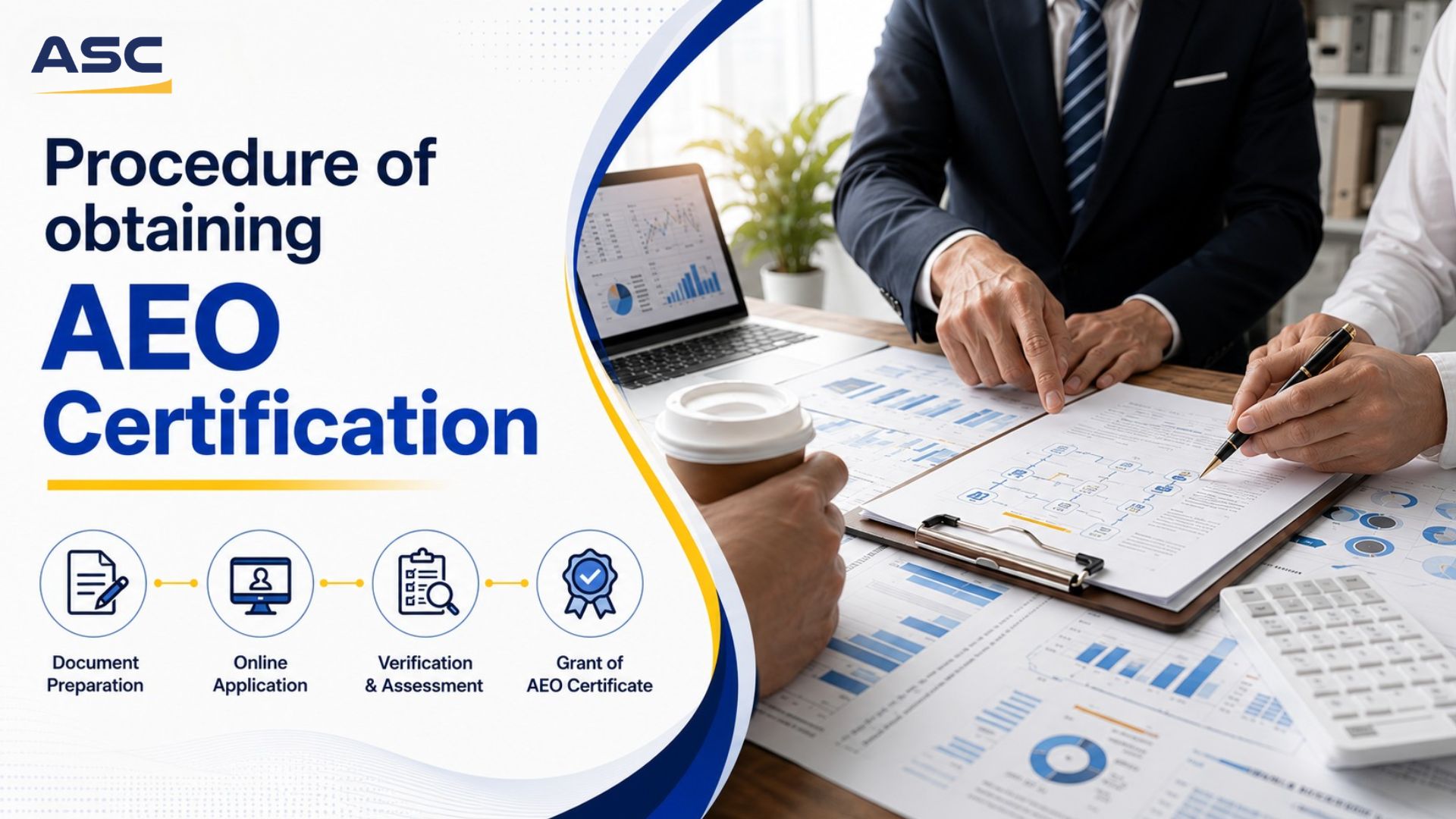
AEO certification isn't a one-time achievement — it's an ongoing commitment. Once a business holds AEO status, Indian Customs expects continuous adherence to the security, financial, and procedural standards that earned that status in the first place. AEO compliance is the discipline of maintaining that standard year-round, not just at the point of certification or renewal.
ASC Group supports AEO-certified businesses — and those preparing for certification — with structured compliance reviews, documentation audits, and ongoing advisory support, so that compliance gaps are caught internally before Customs finds them during a periodic review.
(If you're starting the certification process rather than maintaining existing status, see our AEO Certification services for eligibility, registration, and the application process.)
What Is AEO Compliance?
AEO compliance refers to a certified business's ongoing obligation to meet the standards set out under the WCO SAFE Framework and CBIC's AEO program — across security protocols, internal controls, financial solvency, and customs record-keeping — for as long as the certification remains active. Unlike the one-time certification audit, compliance is continuous: Customs conducts periodic reviews, and any material change in business operations, ownership, or security arrangements has to be reported and re-assessed.
Non-compliance discovered during a periodic review can result in suspension or downgrading of AEO status — which removes exactly the customs-clearance and duty-deferral benefits the certification was meant to provide. Treating compliance as an ongoing function, not a certification-day checkbox, is what protects that investment.
AEO Compliance Review — What It Covers
An AEO compliance review is a structured internal assessment, typically conducted ahead of a scheduled Customs periodic review or after a significant change in the business. It generally covers:
- Security protocol verification — confirming physical and IT security measures still match what was certified.
- Documentation and record-keeping audit — checking that customs records, security plans, and process maps are current and complete.
- Financial solvency check — reviewing whether the business still meets the financial stability criteria tied to its AEO tier.
- Process map validation — confirming the actual flow of goods and information still matches what was documented at certification.
- Show-cause and dispute ratio tracking — monitoring the disputed-duty and disputed-drawback ratios that AEO status depends on staying within threshold.
A review like this is typically far less disruptive than a Customs-initiated compliance check, precisely because gaps get caught and fixed on the business's own timeline.
AEO Customs Compliance Obligations
Beyond the review itself, day-to-day AEO customs compliance means keeping a few things consistently current:
- Reporting material changes in business structure, ownership, or key personnel to Customs promptly
- Maintaining the security plan and process map in sync with actual operations, not just what was filed at certification
- Keeping GST, tax, and customs filing records audit-ready at all times, not compiled reactively
- Ensuring no unreported show-cause notices or compliance breaches accumulate across supply chain partners
- Renewing certification-linked documentation (MSME certificates, board resolutions, etc.) before they lapse
AEO T2 Compliance Requirements
AEO T2 status comes with a higher compliance bar than T1, since T2 combines document verification with onsite verification — and that onsite standard has to hold up on an ongoing basis, not just at the initial audit:
- Physical premises security must continue matching what was verified onsite — not just what's on paper.
- Access control and surveillance systems need to remain operational and documented, since these were physically inspected for T2 approval.
- Ongoing onsite readiness — T2 holders should expect the possibility of follow-up onsite verification during a periodic review, not only at initial certification.
- Progression to T3 depends on maintaining T2 status cleanly for the required period — any compliance lapse can reset that clock.
AEO Compliance Checklist
A practical starting point for a self-assessment:
-
Security plan reflects current physical and IT security measures
-
Process map matches actual current operations
-
No unreported show-cause notices in the trailing three financial years
-
Disputed duty and drawback ratios remain within the required threshold
-
Financial records are current and audit-ready
-
Any change in ownership, structure, or key personnel has been reported to Customs
-
MSME certificate, board resolutions, and other supporting documents are current
-
(T2/T3 only) Onsite security and access control systems are operational and documented
This checklist is a starting point for internal self-assessment, not a substitute for a formal compliance review — the specific requirements depend on your AEO tier and business type.
AEO Trade Compliance — The Bigger Picture
AEO compliance doesn't sit in isolation — it connects to a business's broader trade compliance posture: FTP (Foreign Trade Policy) obligations, GST and customs duty accuracy, and export-import documentation discipline. Businesses that treat AEO compliance as part of a wider trade compliance function — rather than a standalone annual task — tend to move through periodic Customs reviews with far fewer surprises.
How ASC Group Helps
- Pre-review compliance audits — a structured internal check ahead of a scheduled Customs periodic review
- Documentation and process map updates — keeping filed records in sync with actual operations
- Gap remediation support — fixing identified compliance gaps before they become a Customs finding
- Ongoing advisory retainer — continuous monitoring so compliance doesn't lapse between formal reviews
Talk to ASC Group about an AEO compliance review — or if you're pursuing AEO certification for the first time, start with our AEO Certification services page for eligibility and the registration process.
FREQUENTLY ASKED QUESTIONS
Certification is the one-time process of getting AEO status approved. Compliance is the ongoing responsibility of maintaining that status — through periodic reviews, documentation upkeep, and reporting material business changes — for as long as the certification stays active.
Customs conducts periodic reviews of AEO-certified businesses, with the frequency and depth depending on the AEO tier and any changes in the business's risk profile.
Non-compliance can lead to suspension or downgrading of AEO status, which removes the customs-clearance and duty-deferral benefits tied to that status. Addressing gaps proactively through an internal review reduces this risk significantly.
Yes — while T1 doesn't carry the onsite verification requirement that T2 and T3 do, T1 holders still need to maintain documentation accuracy, financial solvency, and dispute ratio thresholds on an ongoing basis.
Leave a Reply